
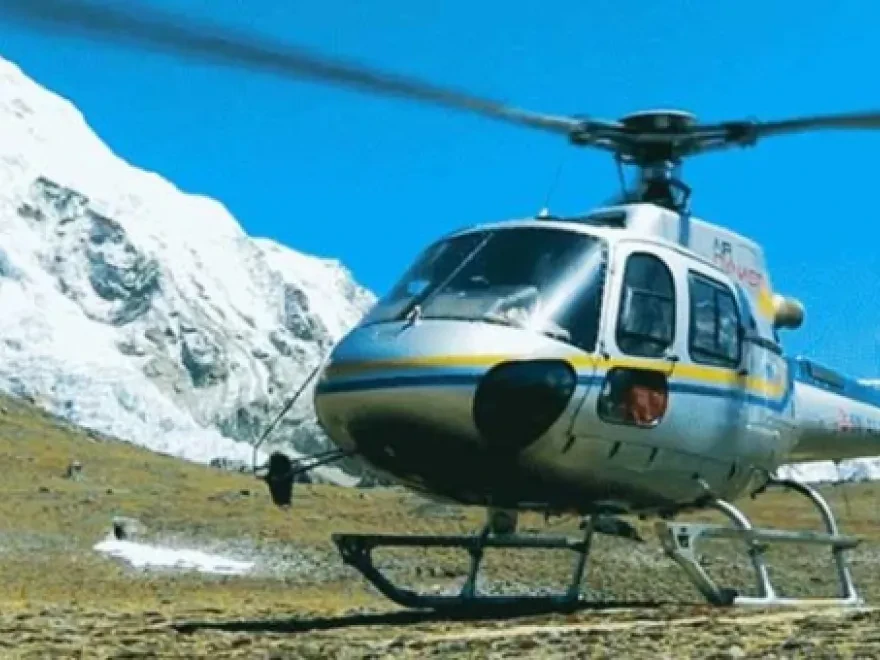


Air Dynasty Heli provides rapid high-altitude rescue services from Kalapathher, Gorakshe, and Everest Base Camp, deploying experienced pilots, paramedics, and rescue specialists to stabilize climbers, manage emergencies, and ensure safe helicopter evacuation to appropriate medical facilities.
The Everest region is the ultimate dream destination for trekkers and mountaineers alike. It is home to the world’s highest peak, Mount Everest (8,848m), along with other towering giants like Lhotse (8,516m), Makalu (8,481m), and Cho Oyu (8,188m). Every year, thousands of adventure enthusiasts travel here to experience its breathtaking landscapes, traditional Sherpa villages, and the unparalleled thrill of high-altitude trekking. Among all the trekking routes, the Everest Base Camp (EBC) Trek is the most iconic and widely recognized globally. Starting from Lukla (2,800m), trekkers traverse through picturesque villages, forests, rivers, suspension bridges, monasteries, and stupas before reaching the EBC at 5,364m.
Despite the breathtaking beauty, trekking in the Everest region is not without its challenges. Long, strenuous trails and high-altitude environments can lead to fatigue and altitude sickness, which is a serious concern for trekkers. Ascending peaks like Kala Patthar (5,545m), Gorakshep (5,164m), and Lobuche (4,930m) exposes trekkers to thin air and harsh conditions. In such cases, even the most prepared and experienced climbers can face medical emergencies or injuries, making emergency evacuation services crucial.
This is where Air Dynasty Heli comes in. Our dedicated team offers rapid helicopter rescues for stranded trekkers at Kala Patthar, Gorakshep, Everest Base Camp, or anywhere in the Everest region. With state-of-the-art helicopters, experienced pilots, and medical assistance onboard, we ensure timely and safe evacuations. Whether you are suffering from mountain sickness, injury, or exhaustion, a simple call to Air Dynasty Heli can make the difference between life and danger. Our helicopters operate year-round, maintaining a ready-to-serve standby mode, so you are never left stranded in high-altitude emergencies.
The Everest region experiences extreme climatic variations throughout the year. For trekkers, mountaineers, and rescue operations, the most favorable periods are pre-monsoon (March to May) and post-monsoon (September to November). During these months, the weather remains relatively stable with clear skies, making helicopter evacuations safer and faster. Visibility is crucial for helicopter rescues, especially when navigating narrow valleys, high ridges, and rugged mountain terrains.
During the spring season (March-May), the region blooms with rhododendrons, and the temperature ranges are moderate, offering trekkers the best opportunity to explore while minimizing the risk of extreme cold. In autumn (September-November), post-monsoon clarity ensures unobstructed views of Everest and surrounding peaks, making helicopter operations smooth and efficient. Conversely, the monsoon season (June-August) brings heavy rainfall, slippery trails, and frequent landslides, which significantly hinder rescue operations. Similarly, the winter months (December-February) have extremely low temperatures and heavy snow, limiting helicopter accessibility and increasing the risk for stranded trekkers.
Key Highlights:
Choosing the right helicopter rescue service in the Everest region can be a life-saving decision. Air Dynasty Heli has established itself as a trusted leader in high-altitude rescue operations, serving trekkers, climbers, and adventurers across Nepal. Here are some key reasons why Air Dynasty is the first choice for emergencies:
Safety-Focused Operations: Safety is our top priority. Weather checks, flight planning, and altitude considerations are meticulously handled before every rescue mission.
Key Highlights:
Emergency Call & Dispatch:
Early in the morning, Air Dynasty Heli receives an urgent distress call from climbers stranded at either Kalapather, Gorakshe, or Everest Base Camp. The operation room immediately assesses the situation, coordinates with local authorities, and prepares a fully-equipped rescue helicopter. The crew, including highly-trained pilots, paramedics, and mountain rescue specialists, conduct a rapid pre-flight briefing, reviewing the terrain, weather conditions, and possible landing zones. Vital emergency medical supplies and survival kits are loaded, ensuring readiness for immediate action.
On-site Rescue Operations:
Upon arrival at the designated location, the team carefully evaluates the condition of the stranded climbers and the surrounding environment. The rescue operation involves navigating challenging high-altitude terrain, strong winds, and thin air conditions. The Air Dynasty Heli crew efficiently manages the landing or hover approach, enabling paramedics to reach climbers quickly. On-site, the team administers first aid, stabilizes injuries, and coordinates safe boarding onto the helicopter. Communication with base operations ensures that every step is documented and that updates are relayed in real-time.
Airlift to Safety and Emergency Care:
Once climbers are secured, the helicopter begins its airlift to the nearest safe location or hospital. During transit, paramedics provide continuous medical monitoring, addressing altitude sickness, frostbite, or other critical conditions. Air Dynasty Heli ensures a smooth and rapid transfer while maintaining in-flight safety protocols and constant communication with emergency medical teams on the ground. The professionalism and speed of the team significantly reduce risks associated with high-altitude rescues.
Post-Rescue Support and Coordination:
After landing, the rescue operation transitions into post-rescue care. Climbers are handed over to local medical personnel or evacuated to specialized treatment centers as required. Air Dynasty Heli’s operations team coordinates follow-up communication with families, updates authorities, and reviews the mission for safety and efficiency improvements. Psychological support and logistical guidance are also provided to ensure that all rescued individuals can recover safely and return to their next steps with confidence.
Air Dynasty Heli specializes in rapid-response helicopter rescues in Nepal’s high-altitude regions, including Kalapather, Gorakshe, and Everest Base Camp. Their team combines expert pilots, experienced paramedics, and mountain rescue specialists to ensure climbers and trekkers are safely evacuated in emergency situations. Using state-of-the-art helicopters equipped for extreme weather and terrain, Air Dynasty Heli can provide medical care on-site and in-flight while coordinating with local authorities to guarantee efficient and timely rescues under challenging conditions.
Air Dynasty Heli maintains readiness for immediate dispatch upon receiving an emergency call. Response times depend on weather, terrain, and location, but the company is trained to navigate high-altitude challenges efficiently. Once the call is received, the operations team mobilizes helicopters and rescue personnel, conducting real-time weather and terrain assessments. Typically, rescues from regions like Kalapather or Gorakshe can be initiated within hours, with climbers receiving professional care as quickly as conditions safely allow, maximizing survival and recovery chances.
Every Air Dynasty Heli mission includes trained paramedics and emergency medical equipment tailored for high-altitude emergencies. The team can manage injuries such as fractures, frostbite, altitude sickness, hypothermia, or other medical emergencies common in the Everest region. On-site stabilization is followed by continuous in-flight monitoring while en route to the nearest safe location or medical facility. Advanced first aid, oxygen therapy, and emergency medications are standard, ensuring climbers receive immediate life-saving interventions during every phase of the operation.
Landing zones at places like Kalapather, Gorakshe, or Everest Base Camp are carefully assessed for safety, terrain stability, and accessibility. Air Dynasty Heli’s pilots and rescue specialists evaluate altitude, slope, wind, and obstacles before attempting a landing or hover maneuver. Sometimes, climbers are hoisted via winch if a full landing isn’t possible. Each landing or hover is meticulously planned, balancing speed with safety, ensuring that the rescue team can access stranded individuals without compromising stability or exposing anyone to additional risk.
Rescue services are available to climbers, trekkers, and expedition members facing emergencies in high-altitude regions. Typically, requests come from climbers themselves, local guides, expedition leaders, or base camp coordinators. Air Dynasty Heli prioritizes life-threatening situations and coordinates with authorities to verify emergencies. While professional expeditions often have pre-arranged communication channels, solo trekkers or smaller groups can also access the service through direct emergency numbers, ensuring timely intervention whenever a life is at risk.
Climbers should always carry reliable communication devices, know their coordinates, and maintain contact with expedition teams or base camps. Familiarity with Air Dynasty Heli’s emergency numbers and protocols can save critical time. It is recommended to travel with companions, carry essential survival gear, and ensure insurance coverage includes high-altitude rescue. Understanding basic first aid and altitude sickness symptoms improves preparedness. Air Dynasty Heli emphasizes that preparation, awareness, and prompt communication greatly increase the effectiveness and speed of rescue operations.
Air Dynasty Heli has extensive experience operating in high-altitude environments with unpredictable weather patterns. While extreme weather like heavy snow, strong winds, or low visibility can temporarily delay rescues, the team uses advanced weather tracking, flight planning, and high-performance helicopters to minimize risk. Safety protocols are strictly followed for both passengers and crew. The team continuously monitors conditions and makes real-time adjustments, ensuring that rescues are executed as safely and quickly as possible under even challenging mountain conditions.
Rescue operations by Air Dynasty Heli are specialized services, and costs vary based on location, altitude, mission complexity, and duration. High-altitude rescues require advanced equipment, specialized crew, and medical support, which contribute to operational expenses. While pricing is determined on a case-by-case basis, climbers are encouraged to have insurance coverage for mountaineering emergencies. Air Dynasty Heli can provide guidance on expected expenses and insurance compatibility to ensure transparency before or after a mission.
Safety is paramount during every rescue. Helicopters are equipped with advanced navigation systems, emergency medical gear, and high-altitude performance enhancements. Paramedics continuously monitor climbers, while pilots follow strict operational protocols. Communication with ground teams and weather monitoring ensure optimal flight conditions. Rescue passengers are secured in specialized harnesses or seating to minimize risk during turbulence or landing maneuvers. Air Dynasty Heli’s training and experience allow safe evacuation even under extreme altitude and environmental challenges, maintaining the highest safety standards.
After the climbers are evacuated, Air Dynasty Heli coordinates with hospitals, medical facilities, and local authorities to ensure continued care. The company also facilitates logistical support such as arranging onward transport, providing emergency supplies, and keeping families informed of the rescue outcome. Psychological support may also be provided for those affected by trauma or extreme stress. The post-rescue protocol ensures climbers are not only physically safe but receive the necessary assistance to recover fully after a high-altitude emergency.