
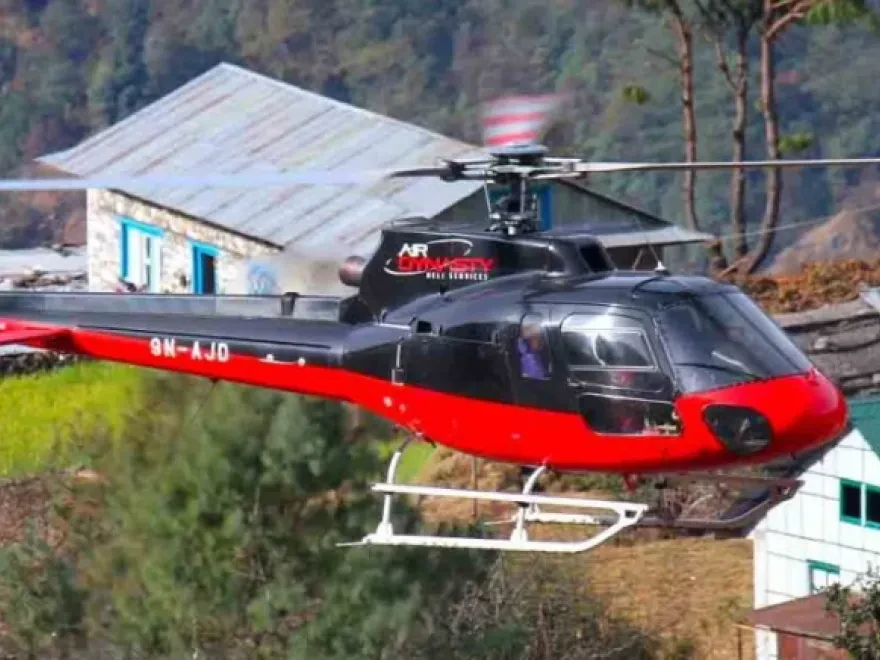


Air Dynasty Heli conducts a rapid high-altitude rescue from Gokyo Valley, locating stranded climbers, providing emergency medical care, and safely airlifting them to medical facilities. The mission demonstrates expert coordination, precision flying, and dedicated lifesaving support in Everest’s challenging mountainous environment.
Gokyo Valley, situated in the Everest region of Nepal, is one of the most picturesque and serene destinations for trekkers and mountaineers. This region, often overshadowed by the Everest Base Camp, offers equally stunning views with fewer crowds, making it a perfect escape for those seeking tranquility amid the Himalayan peaks. The valley is renowned for its series of high-altitude glacial lakes, with Gokyo Lake being the most famous, reflecting the snow-capped peaks like Everest, Cho Oyu, and Lhotse on its pristine waters. Trekkers are also captivated by the green pastures dotted with grazing yaks and the dramatic contrast between icy ridges and clear blue skies. Popular treks like the Gokyo Lakes Trek, Gokyo Ri Trek, and Cho La Pass Trek bring adventurers close to breathtaking landscapes while offering challenging routes for seasoned hikers.
Despite its beauty, trekking in Gokyo Valley presents significant challenges. The region sits at an altitude ranging from 4,700m to 5,500m, which means trekkers can experience the effects of high-altitude mountain sickness. Steep ascents, rocky trails, and icy paths make movement difficult, and in emergencies, evacuation can be complicated due to the remoteness of the area. This is where professional rescue services like Air Dynasty Heli become indispensable. Their quick-response helicopters and trained personnel ensure that trekkers facing injury, illness, or severe altitude sickness can be safely evacuated from even the most inaccessible parts of the valley.
Timing plays a critical role when planning a trek or arranging a rescue operation in Gokyo Valley. The best seasons to visit or operate in the valley are pre-monsoon (March to May) and post-monsoon (late September to November). During these months, the weather is relatively stable, visibility is high, and the risk of avalanches or landslides is lower. The pre-monsoon season showcases blooming rhododendrons and fresh greenery, while post-monsoon offers crystal-clear skies, allowing trekkers and rescuers to enjoy uninterrupted views of the Himalayan range.
Winter (December to February) and monsoon (June to August) seasons are far less ideal. In winter, temperatures can plummet drastically, and heavy snowfall can block trails, making rescue operations risky. During the monsoon, trails can become slippery and rivers swollen, increasing the chance of accidents. Helicopter rescues by Air Dynasty Heli are still possible during adverse conditions, but timing, weather checks, and advanced planning are crucial for safe operations. Seasonal knowledge also allows the rescue team to pre-position resources, ensuring quicker response times for trekkers in distress.
Key Points:
Rescue operations in high-altitude regions like Gokyo Valley require expertise, precision, and reliability. Choosing Air Dynasty Heli ensures safety, speed, and professionalism in emergency situations. The company has a long history of operating in Nepal’s challenging terrain and is well-known for swift and effective high-altitude rescues. Their helicopters are equipped to handle unpredictable weather, steep terrain, and rapid evacuation, ensuring that no trekker is left stranded in a life-threatening situation.
The team’s expertise extends beyond flying; they are trained in high-altitude medical emergencies, altitude sickness management, and accident recovery. This comprehensive approach means that even severe cases of frostbite, dehydration, or injuries from falls can be treated immediately while en route to safer medical facilities. Moreover, Air Dynasty Heli maintains constant communication with trekking agencies, lodges, and mountaineers, enabling a coordinated and rapid response. By choosing this service, trekkers gain peace of mind knowing that in case of emergencies, highly skilled professionals are just a call away, reducing the inherent risks of trekking in the remote and rugged Gokyo Valley.
Key Points:
Emergency Call & Dispatch:
The day begins with the reception of an urgent distress call from climbers stranded in Gokyo Valley. Air Dynasty Heli’s emergency operations center immediately activates its rapid response protocol, gathering critical details about the injured parties’ condition, location, altitude, and environmental risks. The operations team evaluates weather conditions, terrain challenges, and airspace restrictions to ensure a safe mission. Helicopter crews, paramedics, and rescue specialists are briefed on the situation, with flight paths and rescue strategies finalized. Within hours, the helicopter is fueled, equipped, and ready for immediate dispatch, demonstrating Air Dynasty Heli’s efficiency in life-saving missions.
On-site Rescue Operations:
Upon arrival at the Gokyo Valley region, the Air Dynasty Heli crew conducts a meticulous aerial survey to pinpoint the stranded climbers. Utilizing high-resolution cameras and GPS mapping, the team identifies potential landing zones while simultaneously coordinating with the injured climbers via radio. The rescue team executes a delicate landing amidst harsh mountainous terrain, ensuring stability against sudden gusts of wind. Trained paramedics quickly assess the climbers’ conditions, administer first aid, and secure them with harnesses and stretchers. The crew works seamlessly, prioritizing safety and minimizing exposure to altitude sickness and extreme cold.
Airlift to Safety and Emergency Care:
Once the climbers are stabilized and securely loaded, Air Dynasty Heli initiates the airlift to the nearest high-altitude medical facility. The helicopter navigates the treacherous mountainous airspace with precision, maintaining altitude protocols to prevent further injuries. En route, paramedics continue emergency care, monitoring vital signs and managing oxygen therapy as needed. Communication with ground hospitals ensures that doctors are prepared for immediate treatment upon arrival. The combination of rapid evacuation, medical supervision, and Air Dynasty Heli’s expertise in high-altitude flying maximizes the chances of survival and underscores the critical nature of this rescue mission.
Post-Rescue Support and Coordination:
After the climbers are safely delivered to medical care, Air Dynasty Heli coordinates follow-up operations, including contacting families, providing incident reports, and debriefing the rescue team. Medical teams update the company on the patients’ conditions, while logistics specialists evaluate the mission for potential improvements. Air Dynasty Heli also liaises with local authorities and mountaineering agencies to ensure that the climbers’ rescue contributes to ongoing safety measures in the region. The operation concludes with a comprehensive review, reinforcing protocols and celebrating the swift, life-saving response of the crew in one of the world’s most challenging environments.
Air Dynasty Heli specializes in high-altitude helicopter rescues in the Everest region, including the challenging terrain of Gokyo Valley. Their role involves rapid response to emergency calls, deploying trained pilots and paramedics, performing aerial surveys, and safely airlifting stranded or injured climbers to medical facilities. They also provide post-rescue coordination with local authorities and hospitals to ensure comprehensive care. Their expertise in navigating mountainous airspace and extreme weather conditions makes them a leading choice for life-saving missions in the Himalayas.
Air Dynasty Heli maintains a rapid-response protocol designed for high-altitude emergencies. Once a distress call is received, the operations center immediately mobilizes the helicopter crew, medical team, and rescue specialists. Depending on weather and location, they can typically reach climbers within hours. Pre-flight preparation, real-time weather monitoring, and GPS-guided navigation allow Air Dynasty Heli to execute missions efficiently, which is crucial in the thin-air environment of Gokyo Valley where every minute can affect the outcome of a rescue.
Gokyo Valley’s terrain is steep, glaciated, and remote, making locating stranded climbers a complex task. Air Dynasty Heli uses high-resolution cameras, GPS mapping, and aerial reconnaissance to pinpoint the exact location. They maintain constant radio contact with climbers when possible, providing guidance and instructions for safe extraction points. The crew also evaluates potential landing zones and environmental hazards before initiating a landing, ensuring the rescue mission is conducted efficiently while minimizing risk to both the rescue team and the stranded individuals.
Rescue requests can be initiated by climbers, trekking agencies, base camp personnel, or local authorities. Air Dynasty Heli provides a dedicated emergency hotline monitored 24/7 to receive calls from distressed individuals or support teams. They verify the situation quickly, gather essential information, and dispatch the rescue team as required. Their mission is to provide immediate assistance regardless of nationality, experience level, or the trekking company involved, making them a trusted partner for international and local mountaineers alike.
Air Dynasty Heli works closely with Nepalese mountaineering authorities, park officials, and local rescue teams. Coordination includes sharing real-time GPS data, flight plans, and medical reports. By integrating with government and local agencies, the company ensures compliance with aviation regulations and effective deployment of resources. This collaboration also helps in post-rescue support, including reporting, permits for helicopter landing in restricted areas, and ensuring that rescued climbers are safely transported to hospitals or base camps.
Despite advanced equipment and expertise, rescues in Gokyo Valley are sometimes limited by extreme weather, low visibility, or terrain obstacles. Avalanches, crevasses, and high winds can prevent safe landing or hover operations. In such cases, Air Dynasty Heli may use alternative strategies, including high-line extractions or coordinating with nearby camps for temporary shelter until conditions improve. While the company strives to execute every mission successfully, the safety of both the rescue team and the climbers remains the top priority.
After a successful rescue, Air Dynasty Heli continues to support climbers by coordinating hospital admissions, informing family members, and submitting detailed incident reports. They also conduct debriefings to review the mission and gather lessons for future operations. The company liaises with trekking agencies and mountaineering authorities to ensure climbers receive ongoing medical care and logistical assistance. This comprehensive post-rescue approach reflects Air Dynasty Heli’s commitment to not only saving lives but also ensuring the well-being of rescued individuals after the immediate emergency has ended.
During the rescue, Air Dynasty Heli’s paramedics provide comprehensive emergency medical care. This includes stabilizing injuries, administering oxygen for altitude sickness, treating frostbite, and managing trauma from falls or avalanches. The helicopter is equipped with medical supplies, stretchers, and first aid kits tailored for high-altitude emergencies. Continuous monitoring of vital signs and in-flight care ensures the climbers’ condition does not deteriorate during transport. Medical coordination with the nearest hospital allows for seamless transfer and further treatment upon arrival.
Safety during airlift is a top priority for Air Dynasty Heli. Climbers are securely fastened with harnesses and stretchers, while paramedics continuously monitor vital signs. Oxygen supplementation, warming blankets, and protective gear are provided to prevent altitude-related complications. Pilots follow carefully planned flight paths to minimize turbulence and avoid high-risk zones. Every mission also includes pre-flight risk assessments and contingency planning to address unexpected weather shifts, mechanical issues, or changes in the climbers’ condition, ensuring a safe and controlled evacuation.
Air Dynasty Heli operates under strict safety protocols to navigate the unpredictable weather of the Everest region. While their helicopters are designed for high-altitude performance, extreme conditions like heavy snowstorms, whiteouts, or strong winds may delay operations. The company prioritizes the safety of both passengers and crew, conducting detailed weather assessments before takeoff. They maintain real-time communication with local meteorological services and use experienced pilots trained for Himalayan conditions to optimize the chances of a successful rescue.