
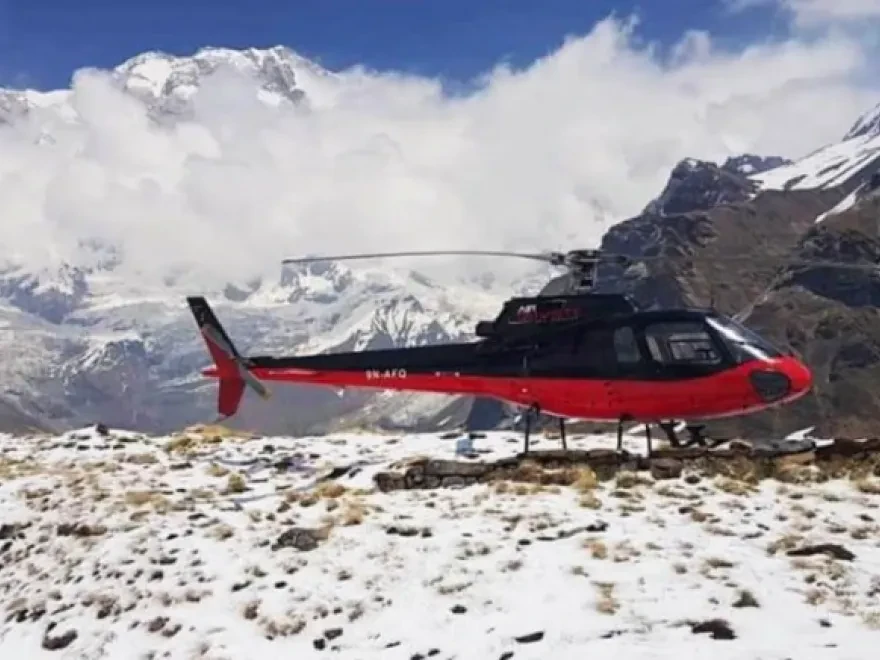


Air Dynasty Heli provides rapid emergency rescue from the Annapurna trekking area, responding to altitude sickness, injuries, and sudden illness. Experienced rescue teams stabilize patients, provide essential medical care, and airlift them safely to hospitals in Pokhara or Kathmandu for further treatment.
The Annapurna Region of Nepal is renowned as a trekking paradise, attracting adventurers from all over the globe. With its diverse trekking options, ranging from the famous Annapurna Circuit Trek to the scenic Annapurna Base Camp Trek, this region offers breathtaking landscapes and a thrilling adventure for both novice and experienced trekkers. Along with these popular treks, there are countless offbeat trails that traverse through villages, terraced farmlands, rhododendron forests, and serene riversides. The Annapurna range itself is home to some of the world’s highest peaks, including Annapurna I (8,091m), Dhaulagiri (8,167m), Gangapurna, Machhapuchhre, and many more, which dominate the skyline and create awe-inspiring views that leave trekkers mesmerized.
However, trekking in the Annapurna Region is not without challenges. Trekkers often face high altitudes, steep trails, rapidly changing weather, and physical exhaustion. For example, the Annapurna Circuit Trek stretches over 160–230 km, passing through demanding terrain such as the Thorong La Pass at 5,416m, where the risk of altitude sickness, hypothermia, or injuries is high. Accidents or sudden illnesses in remote areas can turn a beautiful trekking experience into a life-threatening situation.
This is where Air Dynasty Heli steps in as a lifesaver. We specialize in helicopter rescues in the Annapurna Region, providing fast, reliable, and safe evacuation services. With our state-of-the-art helicopters and professional crew, we respond immediately to emergency calls, ensuring that trekkers are airlifted safely from high-altitude regions to medical facilities or safer locations.
With Air Dynasty Heli, your emergency support is just one call away, ensuring that your trekking adventure remains memorable, safe, and enjoyable.
The Annapurna Region experiences distinct seasonal variations that affect trekking and rescue operations. While trekking is possible throughout the year, the best seasons for both trekking and rescue accessibility are generally pre-monsoon (March to May) and post-monsoon (September to November). During these periods, the weather is relatively stable, skies are clear, and visibility of snow-capped peaks is at its peak. These favorable conditions not only enhance your trekking experience but also make rescue operations safer and quicker for helicopter teams like Air Dynasty Heli.
Spring (March to May) is marked by blooming rhododendrons, lush greenery, and mild temperatures. Trails are less muddy, and most rivers are manageable for crossings. Rescue operations during this time are relatively smooth due to the moderate weather and longer daylight hours. Autumn (September to November) brings crisp air, clear skies, and minimal rainfall, which are ideal for both trekking and aerial rescues. Helicopters can navigate the mountain valleys more effectively, and emergency response is faster.
The monsoon season (June to August) and winter (December to February) present challenges. Monsoons bring heavy rain, landslides, and slippery trails, making rescues risky. In winter, snowfall and extreme cold may delay helicopter missions or restrict accessibility to certain high passes.
Key points for choosing the best season:
Choosing the right season ensures that Air Dynasty Heli can perform rescues promptly, making your trekking adventure much safer and stress-free.
Trekking in the Annapurna Region is an adventure of a lifetime, but it comes with inherent risks. Air Dynasty Heli has established itself as a trusted and reliable helicopter rescue provider for trekkers and mountaineers in this area. Choosing us means prioritizing your safety, speed, and comfort in emergencies. Our team is highly trained in high-altitude rescues, familiar with the region’s challenging terrains, and equipped with modern helicopters capable of flying in extreme conditions.
Our rescue service is designed to respond within minutes, whether it’s for altitude sickness, injuries, sudden illnesses, or severe weather-related emergencies. Every helicopter is fully equipped with medical supplies, oxygen tanks, and a professional crew to stabilize patients during the flight. Moreover, our operations are legal, safe, and coordinated with local authorities, ensuring a seamless and secure rescue experience.
Reasons to choose Air Dynasty Heli:
In essence, trekking in Annapurna is rewarding but unpredictable. Having Air Dynasty Heli as your safety net ensures that your adventure doesn’t turn into a nightmare. With our professional rescue services, you can explore the beauty of the Annapurna Region with peace of mind, knowing that help is always within reach.
Emergency Call & Dispatch:
Trekkers in the Annapurna region often face unexpected challenges such as altitude sickness, injury, or sudden illness. Once an emergency occurs, a distress call is immediately placed to Air Dynasty Heli, reporting the exact location, medical condition, and number of people involved. The helicopter crew quickly assesses the situation, prepares essential medical supplies, and launches from Pokhara or the nearest operational base. The team is fully briefed on terrain challenges, weather conditions, and landing zones to ensure a rapid and safe response to the stranded trekkers.
On-site Rescue Operations:
Upon arrival at the remote location, the highly trained Air Dynasty medical and rescue team conducts a swift assessment of the patient’s condition. Vital signs are monitored, injuries are stabilized, and immediate first aid is administered on-site. The crew carefully prepares the patient for helicopter transport, navigating difficult high-altitude terrain and unpredictable weather. Rescue operations may involve landing on precarious trails or utilizing winches if the terrain does not allow a conventional landing. Every step is taken to ensure the patient’s safety during this critical phase.
Airlift to Safety and Emergency Care:
Once stabilized, the patient is carefully secured inside the helicopter for transport to the nearest hospital, either in Pokhara or Kathmandu. Throughout the flight, the medical team continuously monitors vital signs, provides oxygen, administers medication if needed, and maintains patient stability. The helicopter is equipped with emergency medical equipment to manage any sudden deterioration. The flight path is chosen to minimize altitude changes and turbulence, ensuring maximum comfort and safety. Upon arrival, hospital staff are immediately briefed to take over the patient’s care for urgent treatment.
Post-Rescue Support and Coordination:
After the emergency handover, Air Dynasty Heli continues to provide support to both the rescued trekkers and trekking agencies. They assist in arranging onward travel, liaising with hotels, and coordinating evacuation logistics for the rest of the group if necessary. Follow-up communication ensures that the patient’s recovery is progressing and any additional medical or logistical support is provided. The company also conducts a detailed review of the rescue mission to optimize future operations, ensuring that trekkers in the Annapurna region can explore safely.
Helicopter rescue by Air Dynasty Heli is typically activated in cases of severe illness, high-altitude sickness, serious injury, or accidents during trekking. The rugged terrain, unpredictable weather, and remote villages make timely medical evacuation crucial. Even if injuries are moderate, trekkers may require extraction if they are unable to descend safely. Rescue missions prioritize life-threatening conditions, ensuring trekkers receive immediate medical attention at hospitals in Pokhara or Kathmandu.
Response times depend on weather, helicopter availability, and location accessibility, but Air Dynasty Heli maintains a rapid response protocol. From the moment the distress call is received, the helicopter team prepares equipment, medical supplies, and flight plans to reach stranded trekkers as quickly as possible. In ideal conditions, some rescues can be executed within an hour, while high-altitude or remote locations may require careful planning to ensure a safe approach and landing.
Upon arrival, the medical crew assesses vital signs, stabilizes injuries, and provides necessary first aid. High-altitude rescue often involves supplemental oxygen, intravenous fluids, and immobilization of fractures. The team is trained to manage altitude-related illnesses such as acute mountain sickness, pulmonary edema, or cerebral edema. Only after stabilization will the patient be prepared for airlift, ensuring that the flight does not worsen the condition or cause additional risk.
Yes, landing depends on terrain, weather, and available space. In many areas of the Annapurna region, flat landing zones are scarce, so the helicopter may hover and perform winch operations to safely evacuate patients. Air Dynasty Heli pilots are skilled in high-altitude and mountainous operations, using precise navigation and emergency protocols to land safely or extract patients without compromising safety. Rescue locations are assessed in real-time before each mission.
Absolutely. All rescues include continuous monitoring of vital signs, oxygen administration, and emergency medical interventions as needed. The helicopter is equipped with essential medical equipment such as portable ventilators, defibrillators, and first aid kits. Medical personnel remain with the patient throughout the journey, providing real-time updates to the receiving hospital to ensure seamless care upon arrival at Pokhara or Kathmandu.
Once en route, the crew communicates directly with hospital staff to provide patient condition updates and anticipated arrival times. Hospitals in Pokhara or Kathmandu are informed in advance, allowing them to prepare emergency rooms, necessary medications, and specialist support. This coordination ensures the transition from helicopter care to hospital care is smooth and immediate, minimizing delays in treatment and increasing the chances of a successful recovery.
Any trekker or trekking group facing an emergency in the Annapurna region can request a rescue. Local guides, porters, or fellow trekkers may also initiate a call on behalf of someone in distress. Air Dynasty Heli accepts verified emergency requests, ensuring that only genuine medical emergencies trigger a rescue to optimize safety and resources in the high-altitude environment.
Rescue services by Air Dynasty Heli are charged per mission and typically include airlift, on-site stabilization, and post-rescue support. Hospital treatment, medications, personal travel, and lodging are generally not included. Costs vary depending on distance, weather delays, altitude, and the complexity of the rescue operation. Trekkers are advised to have proper insurance coverage that includes high-altitude helicopter evacuation.
After evacuation, Air Dynasty Heli provides follow-up support, including coordination with hospitals, trekking agencies, and onward travel arrangements. They may assist in communicating with family members, organizing accommodations, or facilitating transfers to other locations. The company also reviews each mission to improve future operations and provides guidance to trekking groups on preventing similar emergencies in the Annapurna region.
Weather is a critical factor in mountainous rescues. High winds, low visibility, rain, or snow can delay or alter helicopter operations. Safety protocols dictate that flights may be postponed or rerouted if conditions are unsafe. Air Dynasty Heli constantly monitors weather patterns and communicates with trekkers regarding estimated response times, ensuring rescues are conducted safely without putting the patient or crew at additional risk.