
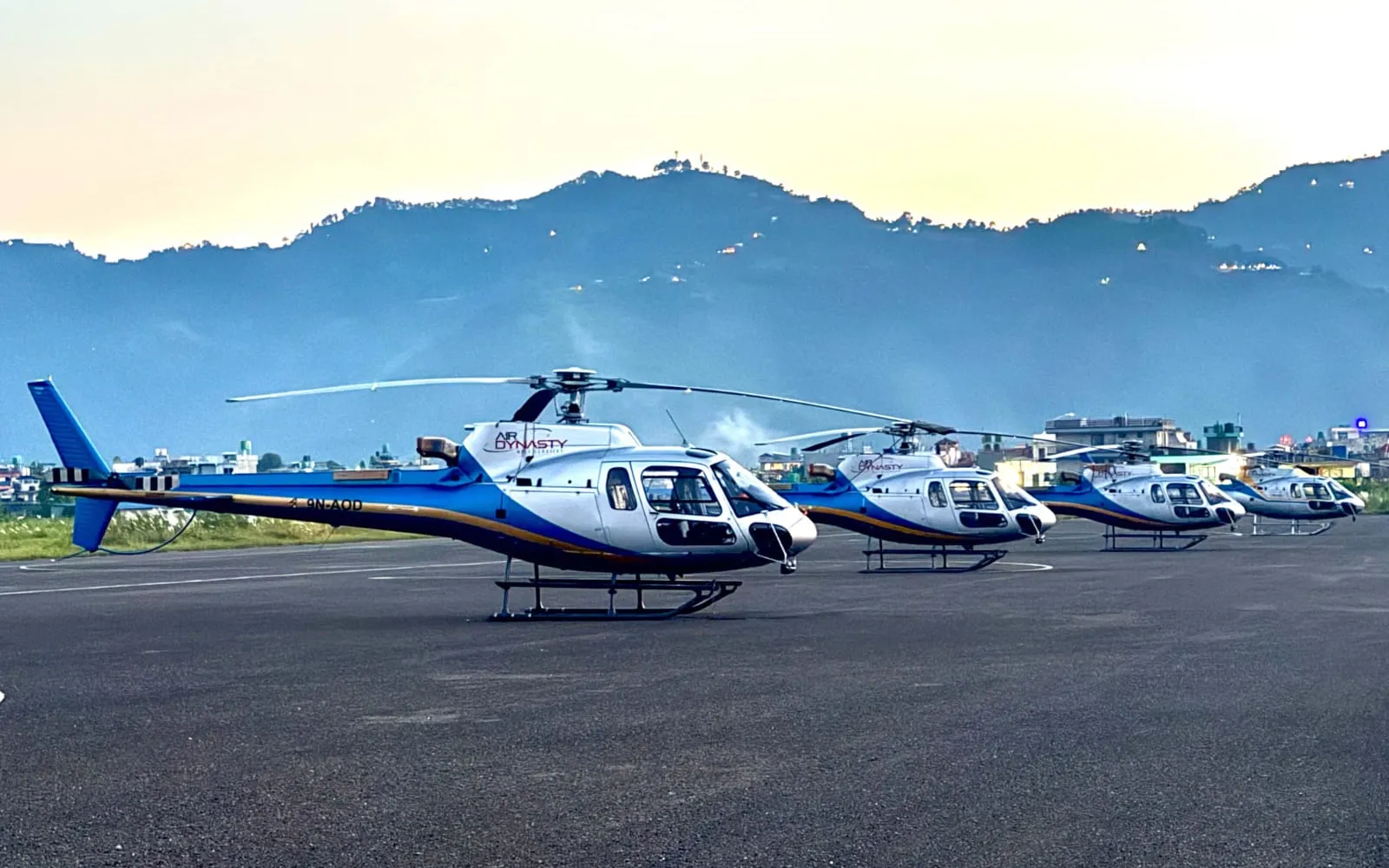
Your first Himalayan helicopter flight is more than a transfer from one place to another. It is a chance to see Nepal from a completely different perspective.
Within a few hours, you can leave Kathmandu behind, fly above deep valleys and mountain settlements, cross rugged Himalayan terrain, and find yourself looking directly at some of the world's highest peaks.
For many travellers, an Everest helicopter tour or Everest Base Camp helicopter flight is a once-in-a-lifetime experience. But before you take off, there are a few things worth knowing about mountain weather, passenger weight, luggage, high-altitude landings and how your flight is actually operated.
Knowing these details beforehand means you can spend less time wondering what will happen and more time enjoying the view.
A typical Himalayan helicopter morning starts early.
Depending on your itinerary, your journey begins with a hotel pickup in Kathmandu, followed by a transfer to the airport. After check-in and the necessary pre-flight arrangements, you meet the flight crew and prepare for departure.
Then the city begins to disappear below you.
The Kathmandu Valley gives way to hills and deep valleys. As the helicopter moves toward the Everest region, the landscape changes dramatically, with rugged ridges, glaciers, and snow-covered Himalayan peaks appearing along the route.
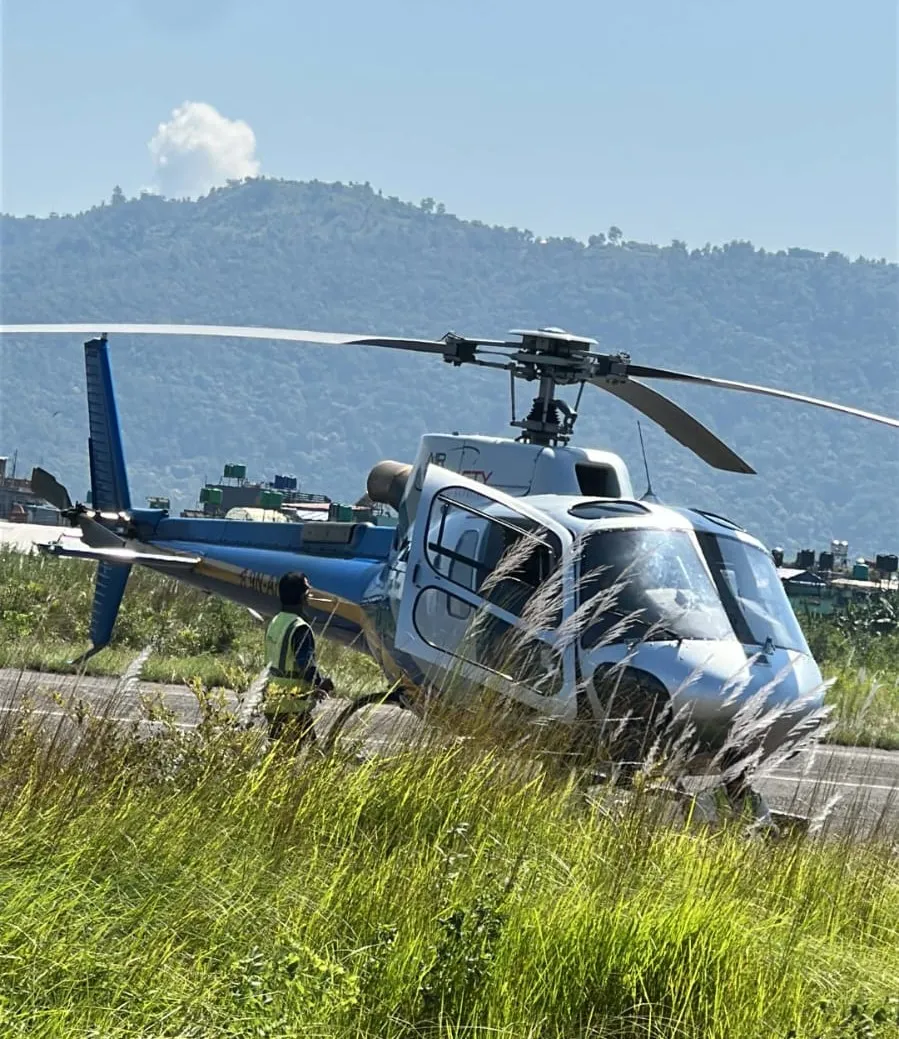
This is one of the biggest advantages of travelling by helicopter: the journey itself becomes part of the experience.
Instead of spending days trekking toward the mountains, a helicopter allows you to experience the Himalayan landscape from the air and, depending on your itinerary and the day's operating conditions, land at selected destinations along the route.
Every flight is slightly different because mountain aviation depends on the conditions of the day.
A typical Everest Base Camp helicopter tour from Kathmandu may include:
The exact route, timing and landing sequence can change depending on weather, visibility, aircraft performance and operational requirements.
One of the most memorable parts of a Himalayan helicopter flight is how quickly the landscape changes.
From Kathmandu's urban environment, you move into green hills, river valleys and mountain settlements before reaching the dramatic high-altitude landscape of the Everest region.
From the air, places that normally require days of trekking appear connected in a completely different way.
You may see:
Lukla to Namche region to Tengboche to Pheriche to Everest Base Camp to Kala Patthar
The exact route depends on your booked itinerary and the operational conditions of the day, but the perspective remains the same: the Himalayas unfold beneath you instead of requiring days of walking to reach every viewpoint.
If your hotel pickup is around sunrise, don't worry; you are not the only traveller awake that early.
Early departures are common for mountain helicopter operations because weather and visibility can change throughout the day. Starting early can provide a useful operating window, although it does not guarantee that the weather will remain suitable.
That is why passengers should be ready to leave early but also understand that the final flight decision depends on actual conditions.
For an Everest helicopter tour, the early start is also part of what makes the experience special. You can watch the first light reach the mountains while flying toward the Everest region.
This is one of the most important things to understand before booking a helicopter tour in Nepal.
Mountain weather does not always behave like the weather you see from Kathmandu.
You might leave your hotel under a clear blue sky, while cloud or wind conditions are developing somewhere along the mountain route.
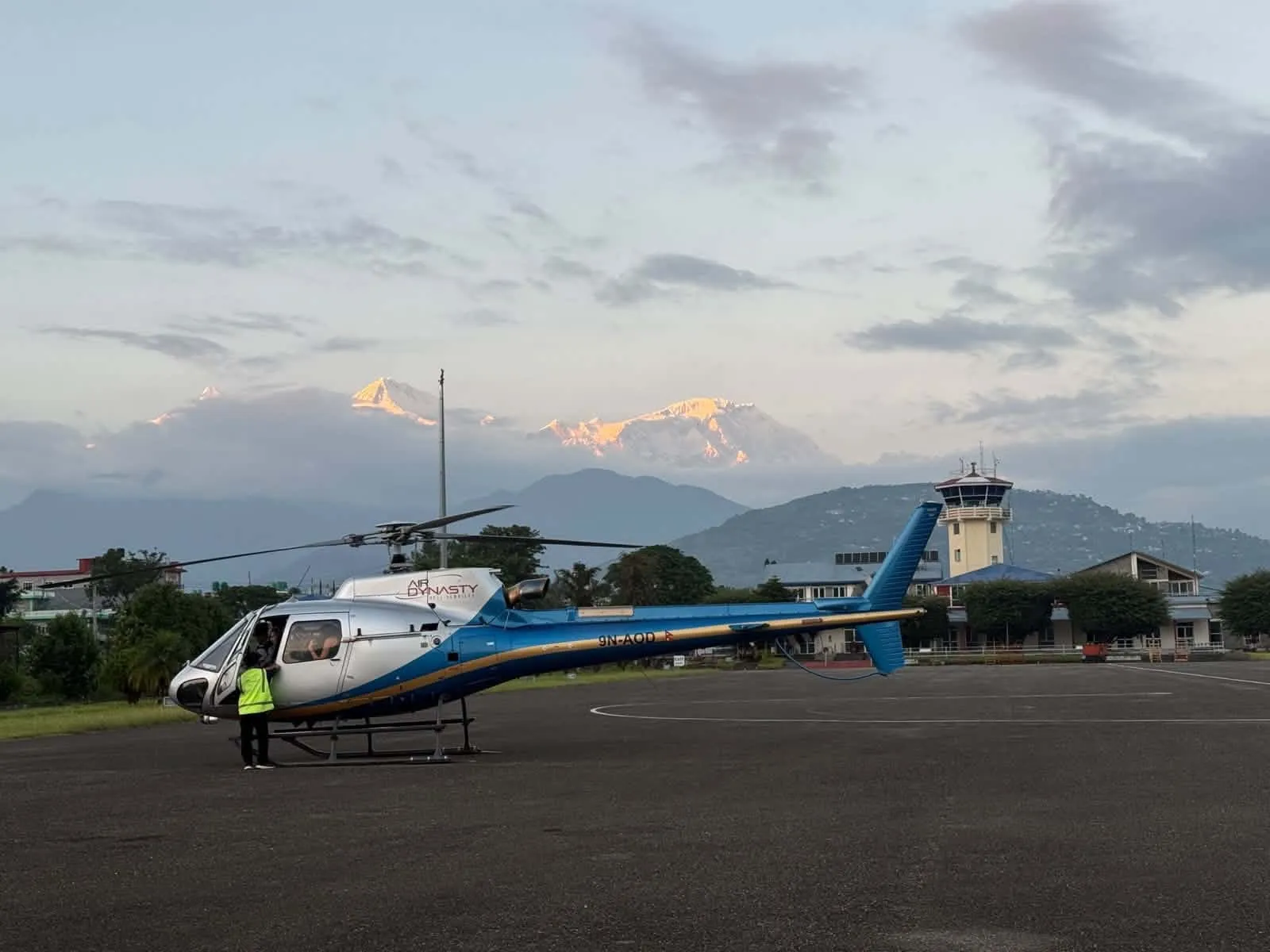
The helicopter crew therefore considers conditions along the actual route and at the planned landing areas.
If conditions are unsuitable, the flight may be delayed, the landing may be changed, or the flight may need to be rescheduled.
That is normal for mountain aviation.
Current Nepal helicopter safety guidance also emphasizes that clear conditions in Kathmandu do not necessarily mean that upper mountain valleys are suitable for helicopter operations.
Your itinerary shows the planned experience. The weather determines how that experience can be operated on the day.
This is one question almost every first time helicopter passenger eventually asks.
The answer is simple: a helicopter has to fly with the total load it carries.
That includes passengers, baggage, fuel and other operational loads.
At higher elevations, reduced air density affects helicopter performance. Airbus' information on H125 operations in the Himalayas specifically discusses the importance of altitude, wind, landing conditions and aircraft weight during mountain operations.
This is why operators may request passenger weights before confirming a high altitude flight.
It is not simply an administrative formality.
Accurate passenger and baggage information helps the operator determine how the flight can be planned.
Can the helicopter carry the maximum number of passengers?
Not necessarily for every high-altitude operation.
A helicopter has 5 passenger seats, but the number of passengers that can be carried on a particular route can depend on:
This is particularly important for high altitude destinations such as Everest Base Camp and Kala Patthar.
Current Nepal helicopter operator guidance also explains that passenger and baggage weight can influence high-altitude helicopter operations.
So when an operator asks for your weight, give the actual weight.
It helps the flight team plan the aircraft properly.
You don't need a full trekking backpack for a helicopter sightseeing flight.
In fact, bringing unnecessary luggage can make the experience less convenient.
For a typical Himalayan helicopter tour, a small personal bag is usually much more practical.
Consider bringing:
If you are carrying professional photography equipment or other heavy equipment, tell the operator in advance.
The goal is simple:
Bring what you need for the experience not everything you packed for Nepal.
Kathmandu can feel comfortable while the temperature at your highest destination is dramatically colder.
For an Everest Base Camp helicopter tour, wear layers so you can adjust your clothing as conditions change.
A practical combination is:
Warm base layer
And don't forget that high altitude sunlight can be intense.
You may be outside for only a short time at a high altitude viewpoint, but you will still feel the difference from Kathmandu.
For travellers booking an Everest helicopter tour with Kala Patthar landing, this is often one of the most anticipated moments.
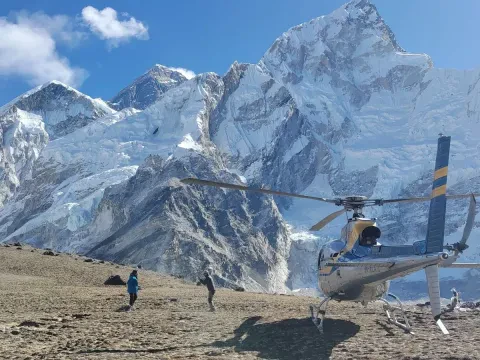
The helicopter approaches the high-altitude viewpoint while the surrounding Himalayan landscape fills the windows.
When landing conditions permit, passengers can step out for a short time to experience the mountain environment and take photographs.
But there is an important distinction:
A planned landing is not a guarantee that the helicopter will land there regardless of the flight day weather conditions.
Weather, wind, aircraft performance, passenger loading, and landing conditions can affect the final decision.
The crew's instructions always take priority.
When you look through the window during a Himalayan helicopter flight, you see mountains.
The pilot is looking at much more.
During mountain operations, the crew has to consider terrain, weather, visibility, altitude, wind, aircraft performance, landing areas and the available route.
Nepal's CAAN requirements include specific high-altitude training and qualification requirements for helicopter pilots operating at higher elevations.
This is one reason a Himalayan helicopter flight should be viewed differently from a normal sightseeing flight over a city.
The scenery may be spectacular, but the operation behind that scenery requires careful planning.
Passengers sometimes wonder why an Everest helicopter flight may include a stop at Lukla.
Depending on the aircraft, route and operational plan, Lukla can form part of the Everest-region operating route.
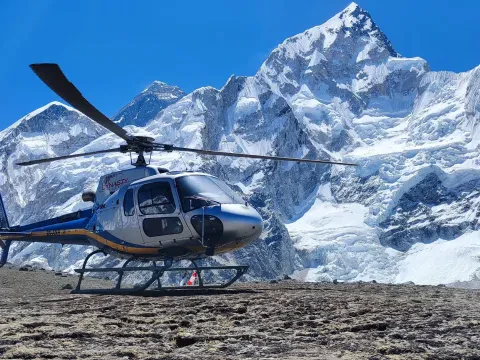
The stop may be for an operational requirement such as fuel drop, refueling, or adjusting the flight plan rather than sightseeing.
So if your itinerary includes Lukla, think of it as part of the mountain flight operation rather than simply another tourist stop.
This is another question worth asking before booking.
Mountain aviation requires flexibility.
If the weather or operating conditions do not allow a particular landing, the pilot and operator may need to modify the flight according to the conditions of the day.
For example, a flight planned with a high-altitude landing may instead involve sightseeing or an overflight of the region if the planned landing cannot be safely completed.
The exact alternative depends on the route, weather, aircraft and operating circumstances.
You don't need to be an aviation expert to enjoy a helicopter flight.
You simply need to listen to the crew.
Before departure, you may receive instructions about:
Follow these instructions even if you have flown in a helicopter before.
And one basic rule is especially important:
Never approach or leave a helicopter until the crew tells you it is safe to do so.
The rotor area is not a place to improvise.
A helicopter is not a commercial aircraft cabin.
Expect:
For photography, this can actually be one of the best parts of the experience.
You are much closer to the landscape than you would be from a large commercial aircraft.
Keep your camera or phone secure, follow the crew's instructions, and enjoy the view, and then you can have photography.
You are travelling rapidly from Kathmandu to a high-altitude environment, so the destination can feel very different from the departure point.
At higher elevations, the air is thinner and temperatures are lower.
You should therefore avoid unnecessary physical exertion after landing and follow the crew's instructions regarding how long you remain outside the aircraft.
If you have a medical condition or concerns about travelling to high altitude, discuss the trip with an appropriate medical professional before travelling.
A few simple preparations can make a big difference.
Wake up prepared
Have your clothes, documents and small bag ready the night before.
Charge your phone
You will probably want to take photographs.
Bring sunglasses
The combination of snow, sunlight and altitude can make sunglasses particularly useful.
Keep your schedule flexible
Do not plan an important connection immediately after the helicopter flight without sufficient time for possible weather or operational changes.
Listen to the crew
They know the aircraft, route and operating conditions. If they ask you to wait, stay seated or return to the helicopter, follow the instruction.
Not every helicopter journey in Nepal is the same.
Your choice may depend on what you actually want to experience.
Everest Helicopter Tour
Ideal for travellers who want to experience the Everest region within a limited travel schedule.
Everest Base Camp Helicopter Tour with Kala Patthar Landing
Designed for travellers who want to combine aerial sightseeing with a high-altitude landing experience when conditions permit.
Langtang Helicopter Tour
A shorter Himalayan experience featuring the Langtang region and surrounding mountain landscape.
Lukla Helicopter Flight
Useful for travellers travelling to or from the Everest region when helicopter transportation is appropriate.
Private Himalayan Helicopter Charter
Suitable for travellers who want greater flexibility over the itinerary, subject to aircraft capacity, weather, landing permissions, and operational requirements.
The right itinerary depends on your travel plans, available time and the type of Himalayan experience you are looking for.
When booking a helicopter flight, look beyond the photograph and the headline price.
Check:
Air Dynasty operates helicopter flights for mountain sightseeing, transfers, charter and other aviation requirements in Nepal.
For an Everest helicopter experience, the focus is not simply on reaching a destination. The flight needs to be planned around the aircraft, route, passenger load and conditions of the day.
Imagine leaving Kathmandu while the city is still waking up.
The helicopter lifts above the valley.
The hills begin to unfold below.
Then the landscape changes again.
Green valleys become rugged mountain terrain. Snow appears on the horizon. Peaks that seemed impossibly distant from Kathmandu begin to fill the windows.
And eventually, you are looking directly toward the Everest region.
That is what makes a Himalayan helicopter flight different.
It is not simply about saving trekking time.
It is about experiencing the Himalayas from a perspective that is impossible to get from the road.
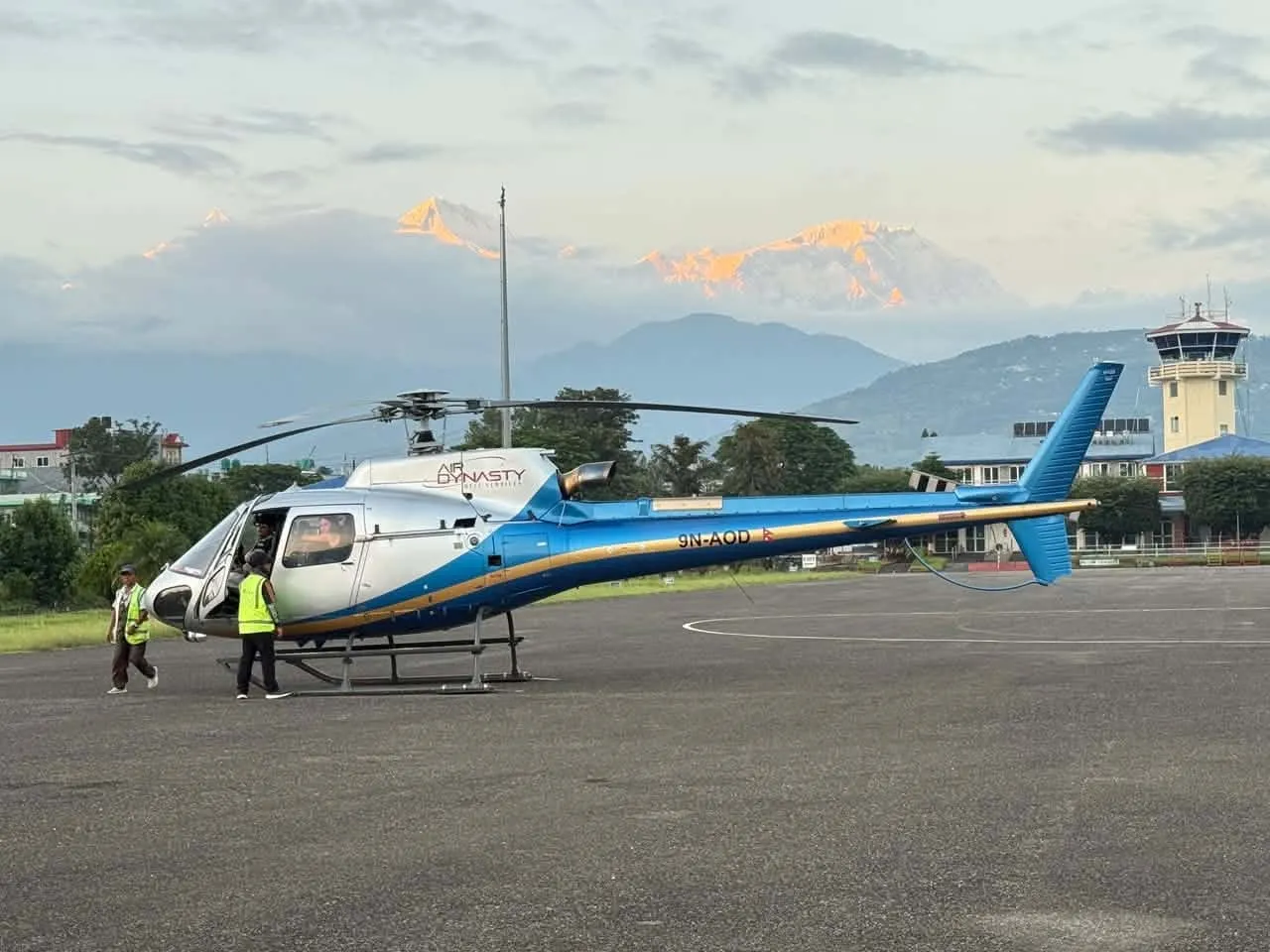
Whether you are planning an Everest Base Camp helicopter tour, Kala Patthar helicopter landing, Langtang helicopter tour, Lukla helicopter flight, or private Himalayan helicopter charter, prepare for the practical side of the journey and then leave some space to simply enjoy the view.
Ready to see the Himalayas from above?
Explore Air Dynasty's helicopter tours and charter options, check your preferred travel date, and contact our team for the latest availability, route information, passenger-weight requirements and booking details.
Air Dynasty Heli Services
Kathmandu, Nepal
Whether you are travelling for the first time or returning to Nepal for another Himalayan adventure, our team can help you understand the available helicopter options before you book.
Contact Air Dynasty for:
Your Journey, Our Priority.
Yes, passengers do not need previous helicopter experience. The crew provides the necessary instructions before departure. Your main responsibility is to follow the crew's directions and provide accurate passenger and baggage information.
Everest helicopter tours commonly operate early in the morning. Your exact pickup and check-in time depends on the itinerary and operating conditions, so confirm the schedule with your operator before the travel date.
Passenger and baggage weight forms part of aircraft loading and performance planning. At high altitude, aircraft performance is affected by air density, temperature, and other factors.
Large luggage is generally not practical for a sightseeing helicopter flight. Ask your operator about the permitted baggage allowance before departure.
Yes. Weather and operating conditions can require a flight to be delayed, changed or rescheduled. A confirmed booking does not override the pilot's operational decision.
Conditions at Kala Patthar can be substantially colder than Kathmandu, and temperatures vary by season and time of day. Passengers should dress in warm layers and be prepared for strong wind and sunlight.
They are different experiences rather than direct substitutes. A trek provides a multi-day journey through the Khumbu, while a helicopter flight provides an aerial experience and can reach the Everest region within a much shorter travel period.
The most suitable period depends on weather, visibility and your travel preferences. Autumn and spring are popular periods for Himalayan travel, but actual helicopter operations remain dependent on conditions on the day.
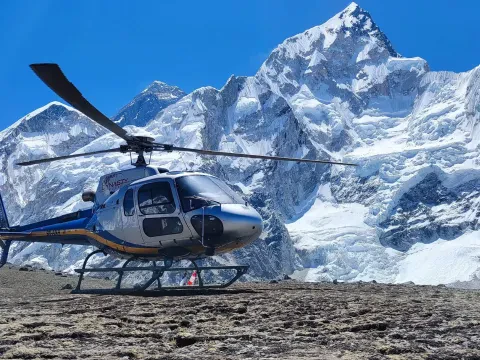
The Everest Base Camp with Everest View Hotel Helicopter Tour is a premium aerial adventure designed for travelers who want to experience the magnificence of the Himalayas in a single unforgettable day. Operated by Air Dynasty Heli, this tour offers a safe, comfortable, and time-efficient way to reach the heart of the Everest region
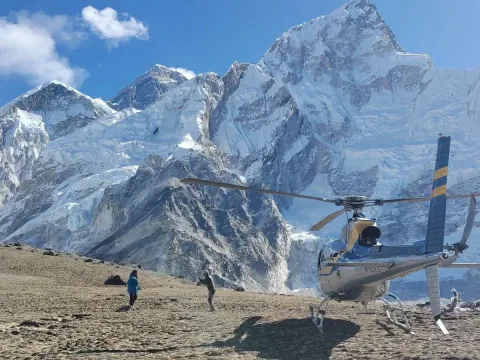
The Everest Helicopter Tour with Kala Patthar Landing by Air Dynasty Heli is one of the most extraordinary ways to experience the majestic beauty of Mount Everest and the Himalayan range in a single day. Designed for travelers who want a close-up view of the world’s highest mountain without the long and physically demanding trek to Everest
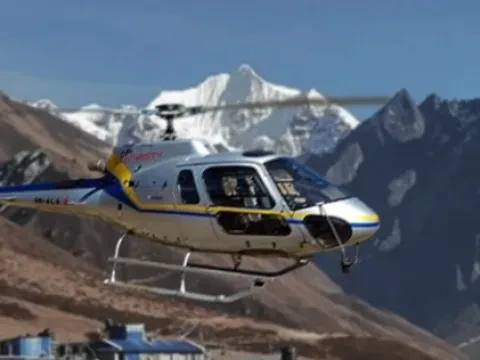
The Langtang Helicopter Tour offers travelers a rare opportunity to witness the majestic Himalayan landscapes without the need for long, strenuous trekking. This tour is perfect for those who want to experience the beauty of Langtang Valley in a time-efficient and comfortable manner. The helicopter ride provides stunning aerial views