
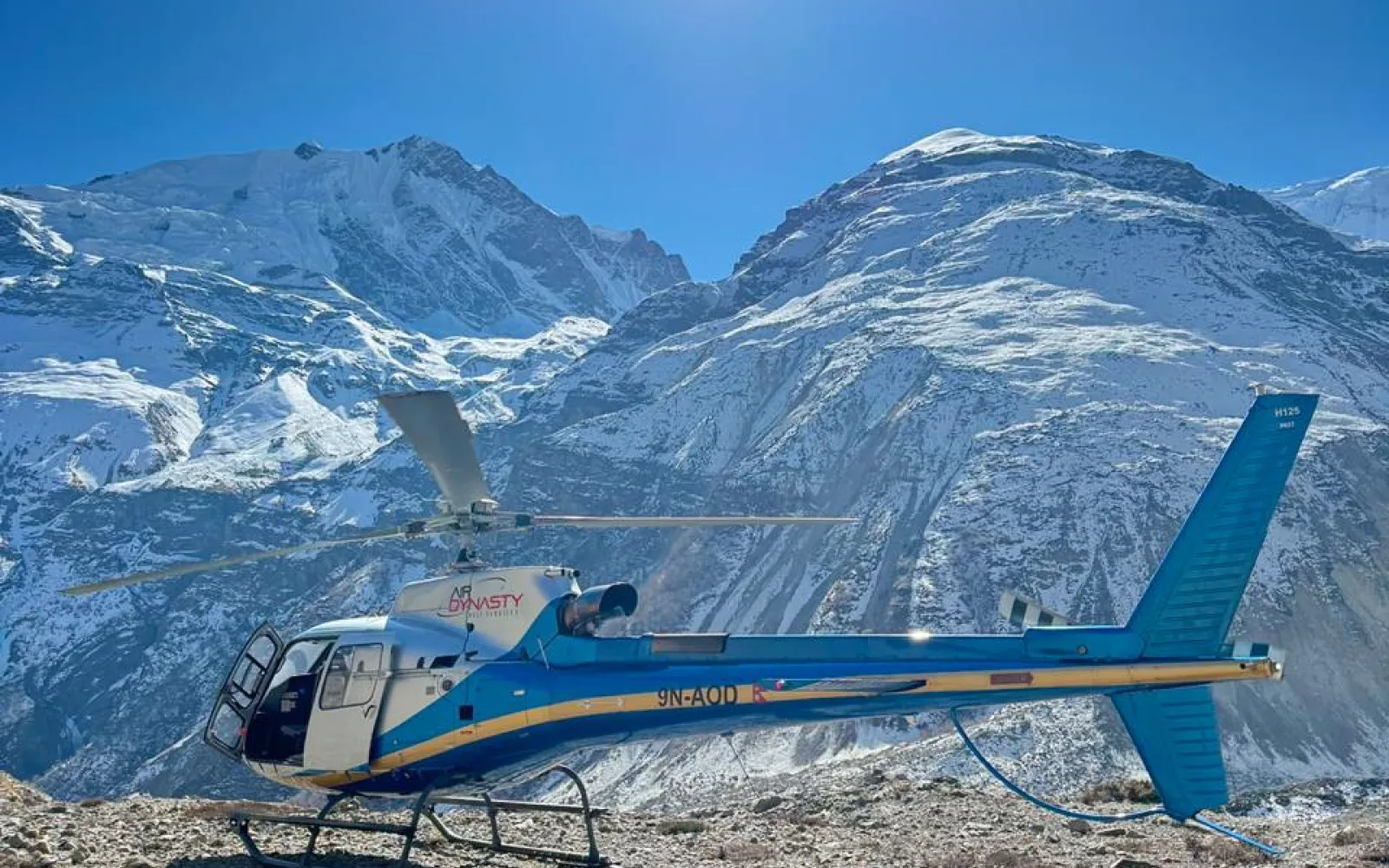
Helicopter flights in the Himalayas involve much more than travelling from one location to another. Mountain terrain, altitude, weather, aircraft performance, passenger and baggage weight, fuel requirements, and landing conditions all need to be considered before and during a flight.
For passengers, a Himalayan helicopter flight may look simple: depart from Kathmandu, fly toward the mountains, land at the planned destination, and return. Behind that itinerary, however, flight planning involves several operational assessments.
In Nepal, this is particularly important because many helicopter routes operate through mountainous terrain and high-altitude areas. The Civil Aviation Authority of Nepal (CAAN) has specific requirements for helicopter operations, including requirements relating to high-altitude operations and pilot qualifications.
A helicopter flight begins with understanding the purpose of the operation, the planned route, the aircraft being used, passenger and baggage information, weather conditions, fuel requirements, and the intended landing locations.
The plan is then assessed against the actual conditions on the day of the flight.
This means a helicopter itinerary is a planned operation rather than an absolute guarantee that every point on the itinerary will be reached exactly as originally scheduled.
Mountain helicopter operations are different from flights over relatively open terrain.
Routes through the Himalayas can involve steep valleys, ridges, changing weather, high elevations, and limited landing areas. Conditions along the route therefore matter as much as conditions at the departure and destination points.
The flight path may be reviewed in relation to:
The route also needs to remain suitable as conditions change during the flight.
Weather is one of the most important considerations for helicopter flights in the Himalayas.
Mountain weather can change quickly, and conditions can be different between Kathmandu, lower valleys, Lukla, Pheriche, and higher areas of the Everest region.
Pilots and operators consider factors including:
Clear weather at the departure point does not necessarily mean that the complete route will have suitable flying conditions.
For this reason, a flight may be delayed even when passengers can see clear skies from their hotel or departure area.
Altitude is a major factor in Himalayan helicopter operations.
As altitude increases, aircraft performance can be affected by air density, temperature, aircraft weight, and available power.
CAAN has specific requirements for high-altitude helicopter operations, including requirements concerning pilot qualifications and training.
The Airbus H125 is designed for demanding high-altitude and high-temperature environments and has been used extensively in mountain operations. Airbus also documents an H125 high-altitude landing and takeoff from Mount Everest in 2005.
However, aircraft capability alone does not determine whether a particular flight or landing is possible. The actual conditions of the flight must also be considered.
Passenger and baggage weight are important parts of helicopter flight planning.
The helicopter must operate within the applicable weight and performance limitations for the specific flight.
The total load can include:
At high altitude, weight and aircraft performance require particular attention.
This is why passengers may be asked to provide accurate body weight and baggage information before departure. Accurate information allows the operator to plan the flight appropriately and determine whether any operational adjustment is required.
Fuel planning is another important part of a Himalayan helicopter flight.
Fuel requirements depend on the planned route, aircraft, operating conditions, weather, and applicable operational requirements.
Mountain operations may also require consideration of possible changes to the planned route or destination.
Fuel planning is therefore not simply based on the shortest distance between two points. It is part of the overall flight plan and must take the planned operation and conditions into account.
A proposed landing location is the intended landing point for the flight, but it does not necessarily guarantee that the helicopter will land there.
The landing area and surrounding conditions may need to be assessed based on:
The pilot in command makes the final operational decision regarding whether a landing can safely be completed.
This is particularly important at high altitude locations where conditions can be more demanding.
A planned helicopter itinerary may sometimes change because conditions during the flight are different from those expected during initial planning.
Possible factors include:
Depending on the circumstances, the pilot may modify the route, change the landing location, wait for improved conditions, return to a previous location, or discontinue the flight.
Such decisions are part of responsible helicopter operations.
A helicopter flight may be booked and carefully planned, but the final operational decision remains with the Pilot in Command.
If conditions are not suitable, the pilot may decide to:
Passenger expectations and booking arrangements do not override operational requirements.
The aircraft, crew, route, weather, and landing conditions all have to remain suitable for the flight to proceed.
Many helicopter flights in the Himalayan region are scheduled early in the day because mountain weather and wind conditions can change throughout the day.
An early departure can provide an opportunity to operate during a suitable weather window before conditions change.
However, an early departure does not guarantee that the entire flight will be possible. Weather and operational conditions remain the determining factors.
If the intended landing cannot be completed, the appropriate action depends on the conditions at that time.
Possible options may include:
The decision depends on the actual weather, aircraft performance, landing conditions, route and operational requirements.
Passengers should therefore understand that mountain helicopter itineraries can change when conditions require it.
11. Why Himalayan Helicopter Planning Is Different
Himalayan helicopter operations bring several factors together:
High altitude + complex terrain + changing weather + aircraft performance + limited landing locations
These factors can interact with one another.
For example, altitude and temperature can affect aircraft performance, while passenger weight and baggage affect the aircraft's overall load. Weather can then determine whether the planned route or landing location remains suitable.
This is why helicopter flight planning in the Himalayas requires continuous assessment rather than relying only on a decision made before departure.
Planning Your Himalayan Helicopter Flight With Air Dynasty
Air Dynasty provides helicopter services for passenger transportation, private charters, sightseeing, rescue, and other aviation operations in Nepal.
Our team can use this information to coordinate the booking and provide the necessary pre-flight information.
All helicopter operations remain subject to applicable aviation requirements, aircraft availability, weather conditions, route conditions, and the final operational decision of the Pilot-in-Command.
Weather conditions can differ significantly between Kathmandu, the mountain route, and the destination. Visibility, cloud, wind and landing conditions along the route also need to be considered.
Passenger and baggage weight form part of the aircraft's overall load. Weight is particularly important for high-altitude helicopter operations where aircraft performance must be carefully considered.
Yes, a proposed landing location is the intended destination, but the actual landing depends on weather, visibility, surface conditions, aircraft performance, terrain, and operational requirements.
No. Aircraft capability is only one part of the assessment. Altitude, temperature, passenger and baggage weight, weather, terrain, landing conditions and operational requirements also need to be considered.
Morning conditions can sometimes provide a suitable weather window before conditions change later in the day. However, the flight remains subject to actual weather and operational conditions.